
Mark 1:2-8 ESV
God often works through people we would expect. He used kings like David, prophets like Isaiah, and priests from established lines. But throughout Scripture, God also delights in using the unlikely—the overlooked, the unconventional, the wilderness voices.
John the Baptist stands as one of the clearest examples of this pattern.
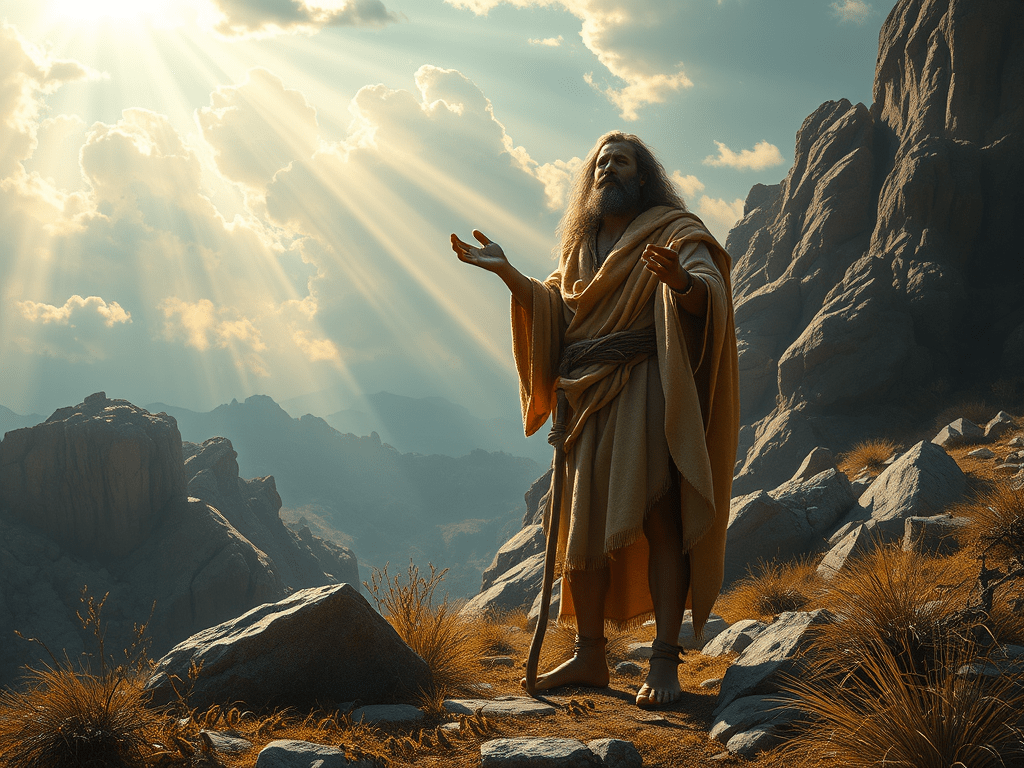
If you were scanning the religious landscape of first-century Israel looking for the next great spiritual leader, John would not have been your first pick. He did not serve in the temple courts of Jerusalem. He did not dress like the religious elite. He did not build influence through political connections. Instead, he appeared in the wilderness, clothed in camel’s hair, eating locusts and wild honey, preaching repentance. Yet according to Jesus, no one born of women was greater than John (Matthew 11:11).
Mark opens his Gospel not with a birth narrative, but with a voice—John’s voice. And in doing so, he shows us something powerful: God uses all kinds of people, and especially those who are willing to be used.
Mark begins, “As it is written in Isaiah the prophet, ‘Behold, I send my messenger before your face, who will prepare your way, the voice of one crying in the wilderness: “Prepare the way of the Lord, make his paths straight,”’ John appeared, baptizing in the wilderness…” What’s fascinating here is that Mark says, “as it is written in Isaiah the prophet,” but then he blends together multiple Old Testament passages. He draws from Malachi 3:1—“Behold, I send my messenger…”—and Isaiah 40:3—“A voice cries in the wilderness…”—and even echoes Exodus 23:20, where God promises to send a messenger before His people.
Mark weaves these texts together and attributes the prophetic thrust to Isaiah, the major prophet whose words shaped Israel’s hope of restoration. Isaiah 40 marks the turning point of comfort and redemption for God’s people. It begins with “Comfort, comfort my people…” and introduces the promise of God’s coming. John is that voice.
For four hundred years, there had been no prophetic voice in Israel. Silence. Then suddenly, in the wilderness, a man appears proclaiming that the Lord is coming. This was not random. John’s life and ministry were the fulfillment of centuries of promise. God had spoken long ago, and now He was acting.
Notice that John did not claim to be the message. He was the messenger. He didn’t draw attention to himself. He pointed forward: “Prepare the way of the Lord.” Every valley raised. Every mountain made low. Every crooked path straightened. The imagery is royal. When a king was coming, roads were cleared and prepared. John’s call to repentance was spiritual road construction. Hearts needed leveling. Pride needed lowering. Sin needed confessing. God used John not because of polish, but because of faithfulness to the message.
Mark tells us, “And all the country of Judea and all Jerusalem were going out to him and were being baptized by him in the river Jordan, confessing their sins.” This is remarkable. John was preaching in the wilderness of southern Israel, near the Jordan River, while the religious elites—the Pharisees, scribes, and priests—were centered in Jerusalem. That was the place of power, tradition, and influence. If you wanted to shape Israel spiritually, you went to Jerusalem. But God did not begin the renewal in the temple courts. He began it in the wilderness.
People left the comfort and prestige of Jerusalem and traveled out to hear John because something authentic was happening. John’s message cut through religious performance and called people to repentance. Repentance was not a popular message then, and it isn’t now. It means turning—turning from sin, turning from self-reliance, turning from empty religion.
John’s baptism symbolized that turning. It was not yet Christian baptism in the full sense after Christ’s death and resurrection. It was a baptism of repentance—a public declaration that one was preparing for God’s coming work. John was preparing people for Christ.
He made this clear when he said, “After me comes he who is mightier than I, the strap of whose sandals I am not worthy to stoop down and untie.” In Jewish culture, untying someone’s sandals was the task of the lowest servant. John says he is not even worthy of that in comparison to the One who is coming. That kind of humility stands in stark contrast to the religious pride of the day. John knew his role. He was not the Messiah. He was not the Savior. He was the forerunner. He baptized with water, but the One coming after him would baptize with the Holy Spirit. Water could symbolize cleansing, but only the Spirit could bring true transformation.
Mark adds a vivid detail: “Now John was clothed with camel’s hair and wore a leather belt around his waist and ate locusts and wild honey.” John looked strange. He did not dress like the polished teachers of the law. He did not wear fine robes. His clothing echoed the prophet Elijah, signaling continuity with the prophetic tradition. His diet—locusts and wild honey—was simple wilderness food. No banquet tables. No religious feasts. Just survival in the desert. Everything about John communicated separation from the religious establishment and dependence on God.
Later, Jesus would speak about John in a striking way in Matthew 11. Jesus asked the crowds, “What did you go out into the wilderness to see? A reed shaken by the wind? A man dressed in soft clothing?” He answered His own questions: no. Those who wear soft clothing are in kings’ houses. They went out to see a prophet—and more than a prophet. John’s appearance was distinct, but his message was even more distinct. In a world of compromise, he was firm. In a culture of religious formalism, he called for heart-level change. In a society longing for political rescue, he pointed to spiritual salvation. His look caught attention, but his message pierced hearts. God did not require John to conform to cultural expectations. He required him to be faithful.
John the Baptist reminds us that God uses the educated and the uneducated, the refined and the rugged, the temple-trained and the wilderness-shaped, the likely and the unlikely. What matters most is not appearance, platform, or prestige. It is willingness.
John did not seek fame. He sought faithfulness. He did not promote himself. He promoted Christ. He did not cling to influence. He prepared to decrease so that Jesus could increase (John 3:30). That is the heart of it.
God uses people who want to be used—people who are willing to say, “Here I am,” people who are content to prepare the way for Christ’s glory, people who are more concerned with obedience than reputation. You may not look the part. You may not feel qualified. You may not stand in the religious center of influence. But perhaps God does some of His greatest work in the wilderness. Perhaps He is not looking for polish, but for surrender. I realize this section of Scripture is about John pointing to Jesus, but John also sets a great example of who God uses. Are you with me?
John’s life still shouts across the centuries: Prepare the way of the Lord. May we be people who prepare hearts—our own and others’—for Christ, and may we trust that the same God who used a camel-haired preacher in the desert still delights in using willing hearts today.

 828 Newsletter